Boiler Repair in Belmont (Bronx), Bronx
Delivering dependable heating diagnostics, mechanical repairs, and no-heat troubleshooting for historic brownstones, multi-family brick walk-ups, and residential row houses across Belmont, Little Italy, and Arthur Avenue.
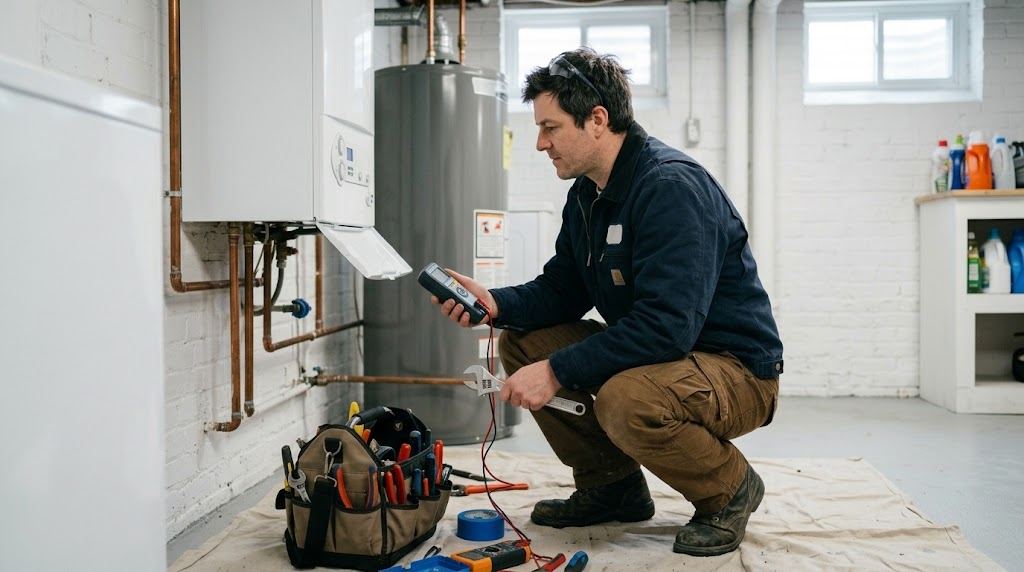
Expert Heating Diagnostics for Belmont & Arthur Avenue
Heating architecture in Belmont reflects more than a century of classic Bronx residential construction. From multi-family brick tenement walk-ups and brownstones lining Hughes Avenue and Crescent Avenue to mixed-use retail properties along Arthur Avenue, heating systems are the vital lifeline of winter property management.
When freezing winter winds sweep across the central Bronx from the Bronx Zoo and Fordham University grounds, heating plants endure heavy operational strain. If your building suffers an unexpected breakdown requiring prompt boiler repair Belmont Bronx, identifying whether the failure is electrical, hydraulic, or combustion-related prevents prolonged freezing conditions for tenants. We handle both low-pressure steam boilers and closed hydronic circuits with methodical diagnostic care.
Whether you require targeted steam boiler repair Belmont Bronx for an older cast-iron giant or emergency response for a complete no heat boiler repair Belmont Bronx lockout, speaking directly with an experienced technician connects you to actionable advice immediately.
Steam vs. Hydronic Hot-Water Boilers in Bronx Housing
Proper service begins with identifying the heating medium. In Belmont, building types dictate vastly different heating mechanics:
Low-Pressure Steam Boilers
Commonly found in pre-war two- to six-family residential buildings and brownstones around Arthur Avenue:
- Sight Glass Waterline: The water level must remain steady in the glass gauge. If water surges erratically or disappears, the low-water cutoff stops the burner.
- Low Operating Pressure: Residential steam operates under 2 PSI. Faulty pressuretrols can spike pressure, blowing safety relief valves and trapping steam.
- Air Venting Dynamics: Radiator air vents must open to release cool room air and snap shut when steam arrives. Clogged vents cause rooms to stay stone cold.
- Piping Pitch: Settling building timbers reverse pipe grades, trapping condensation and triggering severe water hammer.
Hydronic Hot-Water Boilers
Widely used in modernized multi-family row houses, split-levels, and renovated apartment layouts:
- Circulator Pumps: Electric centrifugal pumps force heated water (140°F–180°F) through copper baseboards or radiant panels.
- System Water Pressure: Closed systems maintain 12 to 20 PSI via pressure-reducing fill valves. Pressure loss stops heat flow to upper stories.
- Expansion Tank Cushions: Diaphragm tanks accommodate thermal water expansion; waterlogged tanks cause relief valve discharge.
- Zone Valve Actuators: Motorized zone controls frequently fail electrically, leaving one apartment cold while others overheat.
For dedicated troubleshooting of closed hydronic loops, learn more about our hot water boiler repair Belmont Bronx services, or explore radiator maintenance on our radiator repair page.
Common Boiler Symptoms & Warning Signs
Catching heating faults before severe freeze-ups protects pipes from freezing and prevents expensive burst-pipe emergencies. If your boiler not working Belmont Bronx equipment shows any of these symptoms, schedule an inspection immediately:
No Heat or Burner Lockout
The electronic ignition module clicks or sparks, but the burner shuts down after a few seconds. This points to dirty flame sensors, defective thermocouples, or tripped safety limit switches.
Violent Banging & Kettling
Loud clanging in basement piping indicates steam colliding with trapped water slugs. Rumbling kettling inside the boiler vessel signals heavy mineral lime scale choking heat transfer.
Water Pooling on Basement Floors
Puddles around the boiler jacket signal leaking circulator pump gaskets, failed drain cocks, cracked cast-iron boiler sections, or a discharging 30-PSI pressure relief valve.
Pressure Gauge Irregularities
Pressures rising above 30 PSI on hot-water boilers cause relief valves to spew scalding water. Zero pressure means the automatic water feeder is clogged or closed.
Yellow Burner Flames & Soot
Clean natural gas boiler repair Belmont Bronx combustion requires crisp blue flames. Yellow, lazy flames signify poor draft, clogged burner orifices, or dangerous carbon monoxide buildup.
Low-Water Cutoff Rapid Cycling
Float-style low-water cutoffs choked with iron sediment falsely shut off the burner, or worse, fail to detect dry-fire conditions that crack cast-iron blocks.
What Happens During a Boiler Diagnostic Visit
We do not guess at mechanical faults or replace parts arbitrarily. Every inspection follows a structured diagnostic sequence designed to locate electrical, mechanical, and safety defects:
-
1
Visual Safety & Flue Gas Check
We inspect the exterior boiler jacket, check the manual gas shutoff valve, verify smoke pipe draft connection to the chimney, and test for carbon monoxide spillage around the draft hood.
-
2
Electrical & Control Circuit Testing
Using digital multimeters, we verify line voltage, step-down 24V transformer output, thermostat continuity, aquastat switches, pressuretrol limits, and electronic ignition modules.
-
3
Water Level & Safety Device Verification
For steam units, we flush the low-water cutoff blowdown valve to ensure smooth float action and clear sediment from the gauge glass. For hydronic units, we test system fill pressure and expansion tank charge.
-
4
Combustion & Burner Assembly Service
We inspect natural gas burner trays, spark electrodes, pilot tubes, and flame rectification rods, ensuring clean ignition and balanced air-to-fuel ratios.
-
5
Operational Cycle & Heat Distribution Check
Following repairs, we fire the boiler through an entire heating cycle to verify steady burner operation, proper draft, stable waterlines, and even heat rising to living spaces.
Belmont & Arthur Avenue Building Considerations
In Belmont's historic Little Italy district—centered around Arthur Avenue, East 187th Street, and Belmont Avenue—residential properties frequently date back to the early 20th century. Multi-family row houses and walk-ups often feature massive cast-iron steam boilers that have been converted across multiple fuel generations from coal to oil, and eventually to natural gas.
Decades of building settling in these classic Bronx structures can create subtle pipe sags along basement steam headers. In addition, mineral buildup from years of hard city water circulation can restrict flow in older distribution branches. Whether you manage properties near Little Italy (Arthur Avenue), close to Fordham, or along East Tremont, understanding these specific local building conditions ensures repairs address underlying causes rather than surface symptoms.
Homeowner & Property Manager Safety Rule
Never bypass an automatic low-water cutoff, disable a high-limit aquastat, wire around a spill switch, or wedge a gas valve open. Doing so creates grave risks of boiler explosion, dry-fire cracking, gas explosions, and lethal carbon monoxide poisoning. Always call a licensed heating professional.
Repair vs. Replacement: Evaluating Heating Equipment
Many boiler malfunctions can be economically resolved by replacing an ignition control, thermocouple, circulator pump, or pressure relief valve. However, catastrophic failures indicate that replacement is the safer, more cost-effective choice.
| Evaluation Factor | When Repair is Sensible | When Replacement is Recommended |
|---|---|---|
| Cast-Iron Block Integrity | Vessel sections are watertight with no cracks or internal leakage. | Sections have cracked, corroded through, or leak water into the burner chamber. |
| Equipment Age | Unit is under 15 years old with readily available manufacturer parts. | Boiler is 20 to 30+ years old; parts are obsolete or discontinued. |
| Frequency of Breakdowns | First breakdown in several heating seasons; isolated component wear. | Repeated emergency service calls every winter; chronic ignition failures. |
| Combustion Efficiency | Burner maintains clean blue flames with steady draft. | Chronic sooting, high fuel consumption, and severe heat exchanger scaling. |
If your heating system has reached the end of its useful life, review our complete guide to boiler replacement in Belmont to learn about radiation sizing, chimney venting, and NYC DOB filing requirements.
Seasonal Maintenance & Homeowner Prevention Tips
Basic non-invasive checks help prevent sudden mid-winter heating emergencies across Belmont residences:
- Check the Red Emergency Switch: Emergency burner switches located at the top of basement stairs can be bumped accidentally. Make sure the toggle is flipped to ON before calling for service.
- Verify Thermostat Operation: Install fresh alkaline batteries in your digital thermostat and ensure it is set to HEAT with the temperature set higher than the room reading.
- Monitor the Steam Sight Glass: Inspect the water column monthly. If water is cloudy or rusty, flush the low-water cutoff blowdown valve into a bucket until clean water appears.
- Keep the Boiler Room Clear: Never store flammable materials, paints, gasoline, or clutter within three feet of your heating equipment. Boilers require fresh combustion air to operate safely.
- Bleed Air from Hydronic Radiators: For hot-water baseboards, use a radiator key to release trapped air if the unit feels cold while the boiler is running.
Related Heating & Plumbing Services in Belmont
In addition to dedicated boiler diagnostics, we provide specialized mechanical support for interconnected residential systems across the Bronx:
Boiler Replacement
Accurate radiation sizing, energy-efficient gas conversions, and turnkey heating plant installations with full NYC Department of Buildings compliance.
Steam Heat & Radiator Repair
Fixing cold cast-iron radiators, hissing air valves, leaking shutoff packings, and violent pipe banging across older Belmont multi-family residences.
Water Heater Repair
Troubleshooting gas and electric water heaters, thermocouple failures, tank leaks, and indirect storage tanks tied into central heating boilers.
Gas Line Repair & Inspection
Precision manometer pressure testing, gas piping diagnostics, appliance hookups, and NYC Local Law 152 visual inspection compliance.
Leak Detection
Non-invasive acoustic and thermal detection to locate concealed pipe leaks in walls, ceilings, and risers between apartment floors.
Sewer Line Repair
High-resolution video camera inspections, underground root clearing, and main building sewer line repair for older Bronx drainage systems.
Frequently Asked Boiler Repair Questions
What should I check first when my Belmont apartment building or row house loses heat?
First, verify that the emergency red boiler shutoff switch at the basement stairs has not been accidentally tripped. Next, confirm that the thermostat is calling for heat with fresh batteries. On steam boilers, look at the glass sight tube: if water is below the minimum line, the low-water cutoff has safely disabled the burner. If the boiler hums or clicks without lighting, or you detect any odor of fuel gas, immediately switch off power and call (315) 202-8009 for professional diagnostic service.
Why are cast-iron radiators clanging and banging loudly in Arthur Avenue buildings?
Banging steam pipes—known as water hammer—occur when steam collides with trapped, condensed water pooled inside pipes or radiator bodies. In older Belmont multi-family buildings, building settlement often tilts radiators the wrong way, preventing condensate from draining back to the boiler. Water hammer can also be triggered by defective air vents or an overfilled boiler operating at excessive steam pressure.
What is the difference between steam boiler repair and hydronic boiler repair?
Steam boilers boil water to push low-pressure steam vapor (typically 0.5 to 1.5 PSI) through single-pipe or two-pipe risers to cast-iron radiators, relying on sight glasses and low-water cutoffs. Hydronic boilers heat water to 140°F–180°F without boiling, pumping pressurized water (12 to 25 PSI) through closed loops using mechanical circulators. Each requires distinct diagnostic testing, safety controls, and pressure balancing.
Can older heating systems in Belmont brownstones be balanced for even temperature?
Yes. Balancing steam heating in Belmont multi-family buildings is achieved by installing calibrated, adjustable air elimination vents on radiators and large main air vents on basement header pipes. This ensures steam reaches top-floor apartments at the same time as ground-floor units without overheating lower levels.